
The Fight Before the Fight
Washington's most effective advocates are no longer winning arguments. They are engineering the conditions under which opposing arguments cannot land.
Every week, somewhere in Washington, a communications team prepares a brief that will not be read. The data is solid. The economic case is careful and well-sourced. The policy analysis is sound. Someone presents it on a Tuesday. By Thursday, the narrative has moved in the other direction, and the brief is sitting in an inbox it never escaped.
The explanation most organizations reach for is familiar: better-funded opposition, bad timing, a distracted press corps. These things happen, and sometimes they are the reason. But there is a different explanation that comes up less often, one that is more uncomfortable and more accurate. The organizations losing these fights were not out-argued. They were out-thought before the argument started.
The past two weeks in Washington have produced four separate policy fights, across four sectors with nothing in common, and each one has been shaped not by the strength of the economic arguments but by the psychological conditions under which those arguments arrived. The advocates who are winning are not winning on the merits. They are winning because they understood something about how the human brain processes blame, urgency, and threat that the organizations they oppose have not yet incorporated into their communications infrastructure.
These are not abstract concepts. They have names. They are well-documented. And they are rarely, if ever, mentioned in a communications planning session.
"Most organizations know what they want to say. Very few have assessed whether the conditions exist for it to be heard. Preparing a policy argument without that read is like addressing a putt without knowing the slope of the green. The stroke can be perfect. The ball still doesn't go where you intended."
The Mechanisms Behind the Moves
Cognitive psychology has been documenting the ways human judgment departs from rational analysis for decades. The research on how people form opinions, assign blame, and make decisions under pressure is substantial and consistent. There are hundreds of documented cognitive biases, and any serious communications environment will have several of them operating at once.
What follows is not a complete inventory. It is a snapshot. Four mechanisms surfaced clearly enough in Washington's policy fights over the past two weeks to be worth naming. They are not the only ones present. They are four that are visible right now, in these specific fights, doing identifiable work. The point is not the list. The point is that this kind of read is possible, that most organizations are not doing it, and that the ones who are have a meaningful advantage over the ones who aren't.
Present Bias is the tendency to assign far more weight to immediate, visible consequences than to abstract future ones, even when the future consequences are larger. People will accept significant long-term costs to avoid present pain. Advocacy that creates or amplifies a visible, immediate problem wins against advocacy that argues from principle.
The Identifiable Victim Effect is the well-documented phenomenon in which a single, concrete, emotionally vivid person or group generates more moral response than statistical harm to thousands. One child with a face is more mobilizing than one in five children in a dataset. Advocacy built around an identifiable victim bypasses cost-benefit analysis entirely.
Fundamental Attribution Error is the cognitive tendency to over-attribute outcomes to the character of individuals or institutions rather than to situational factors. When things go wrong, people look for an agent to blame. Complex, systemic explanations feel like evasion. A clear villain is more satisfying and more politically useful than an accurate account of structural failure.
Anchoring is the phenomenon in which the first piece of information introduced into a decision frames all subsequent judgment. A bill named the "Make the District of Columbia Safe and Beautiful Act" does not need to pass to succeed. It needs only to force the opposition to begin its counter-argument by defending against "safety and beauty." The anchor sets the terms. Everything after is downstream from it.
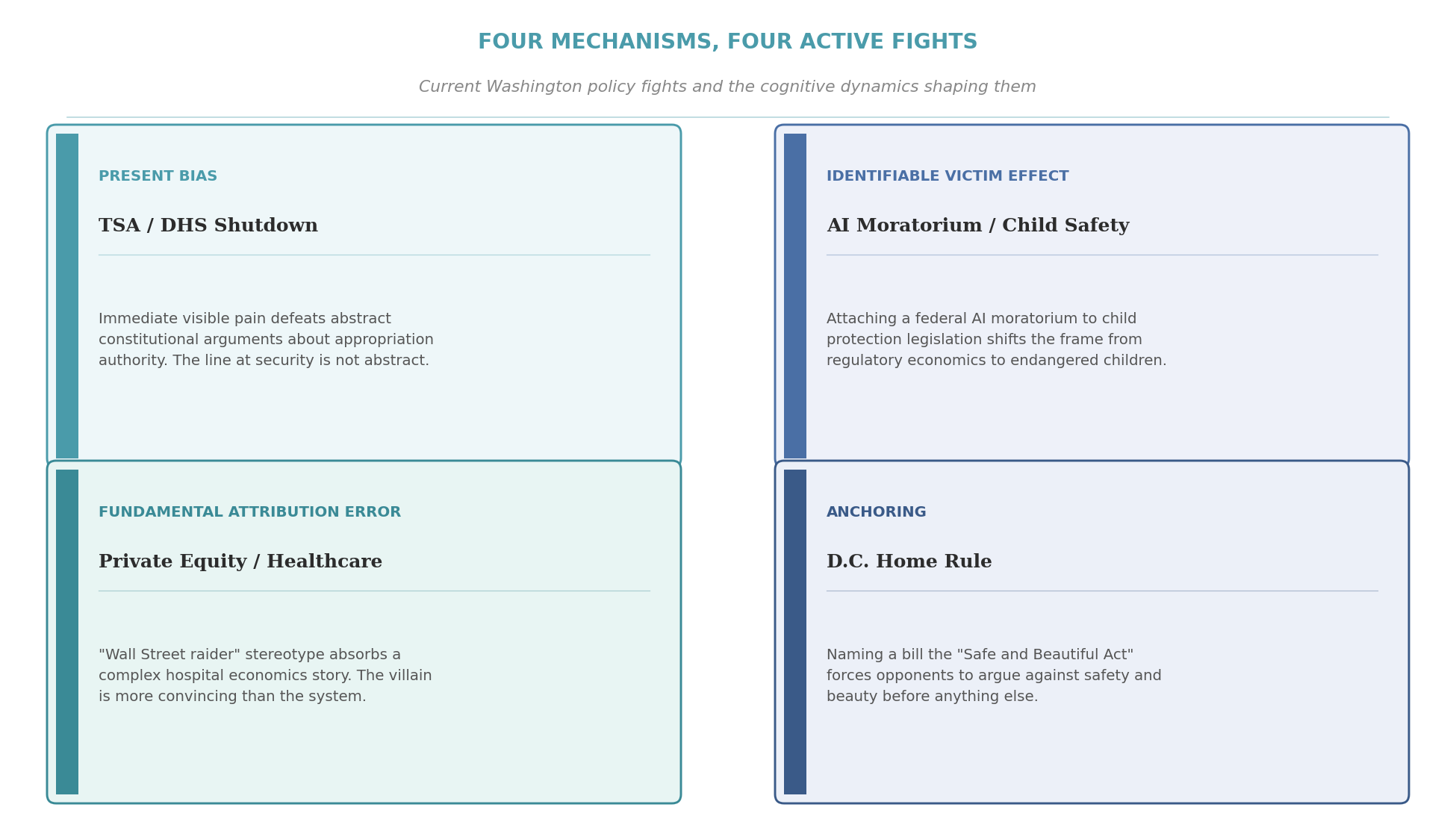
Chart 1: Four Mechanisms, Four Active Fights | Narrative Velocity | Accelerate Advocacy
Washington's Four Active Demonstrations
Each of these fights is ongoing. Each is being shaped by one of these mechanisms. None of them are primarily about the merits.
Present Bias: The TSA Shutdown
Congress left for spring recess without resolving the DHS funding stalemate, leaving 50,000 TSA officers without pay and air travel in visible, daily disruption. Delta suspended special privileges for members of Congress. Airport lines stretched. The operational pain was immediate, specific, and impossible to ignore.
The executive action that followed redirected funds to pay TSA personnel, bypassing the constitutional argument about congressional appropriation authority entirely. That argument is not wrong. It is invisible against the backdrop of a traveler who missed a flight. Present Bias does not evaluate which argument is more important. It evaluates which consequence is more real, right now, in this moment. The constitutional concern is abstract. The line at security is not.
Organizations that rely on principle-based arguments in environments of acute visible pain are playing a losing game. They are arguing for the future in a room full of people managing the present.
The Identifiable Victim Effect: AI and Child Safety
The federal push for a moratorium on state-level AI regulations is a jurisdictional fight about federal supremacy, regulatory coherence, and the economic cost of a fragmented compliance landscape. That is the accurate description of what is at stake. It is also the version that loses.
The moratorium has been attached to digital child protection legislation. The frame has shifted from regulatory economics to endangered children. The Identifiable Victim Effect does not require a real victim to be effective. It requires a vivid, credible image of one. "Child safety" as an anchor creates a situation where opposing the moratorium is cognitively adjacent to opposing protection of children. The economic argument for state-level innovation has not become weaker. It has become inaudible.
Fundamental Attribution Error: Private Equity and Healthcare
The "Take Back Our Hospitals Act of 2026" seeks to prohibit Medicare payments to hospitals and skilled nursing facilities owned by private equity funds and REITs. It frames private equity ownership as the cause of hospital closures, staffing shortages, and declining care quality.
The actual dynamics of hospital economics involve Medicare reimbursement formulas, demographic concentration, rural underfunding, and decades of consolidation driven by regulatory structure. These are situational factors. They are accurate. They are also invisible to Fundamental Attribution Error, which is not interested in systems. It is interested in agents. "Private equity" functions as a pre-loaded stereotype. The Wall Street raider is a recognizable character. The broken reimbursement formula is not. Organizations responding to this legislation with economic data are providing a situational explanation to an audience whose cognitive architecture has already assigned the cause to a character. The data does not reach them because it is answering a question they are no longer asking.
Anchoring: The D.C. Home Rule Fight
The "Make the District of Columbia Safe and Beautiful Act" is a piece of legislation. It is also an anchor. Opponents of the bill must now position themselves as arguing against safety and beauty, which is not a defensible rhetorical position regardless of the policy merits.
Anchoring works before the argument begins. The name of the legislation is not incidental. It is the first message the public receives, and every subsequent message is processed relative to it. Local governance advocates face a situation familiar to any organization that has found itself arguing against the plain language of an opponent's framing: the argument you need to make is correct, but the field it has to be made on was not neutral to begin with.
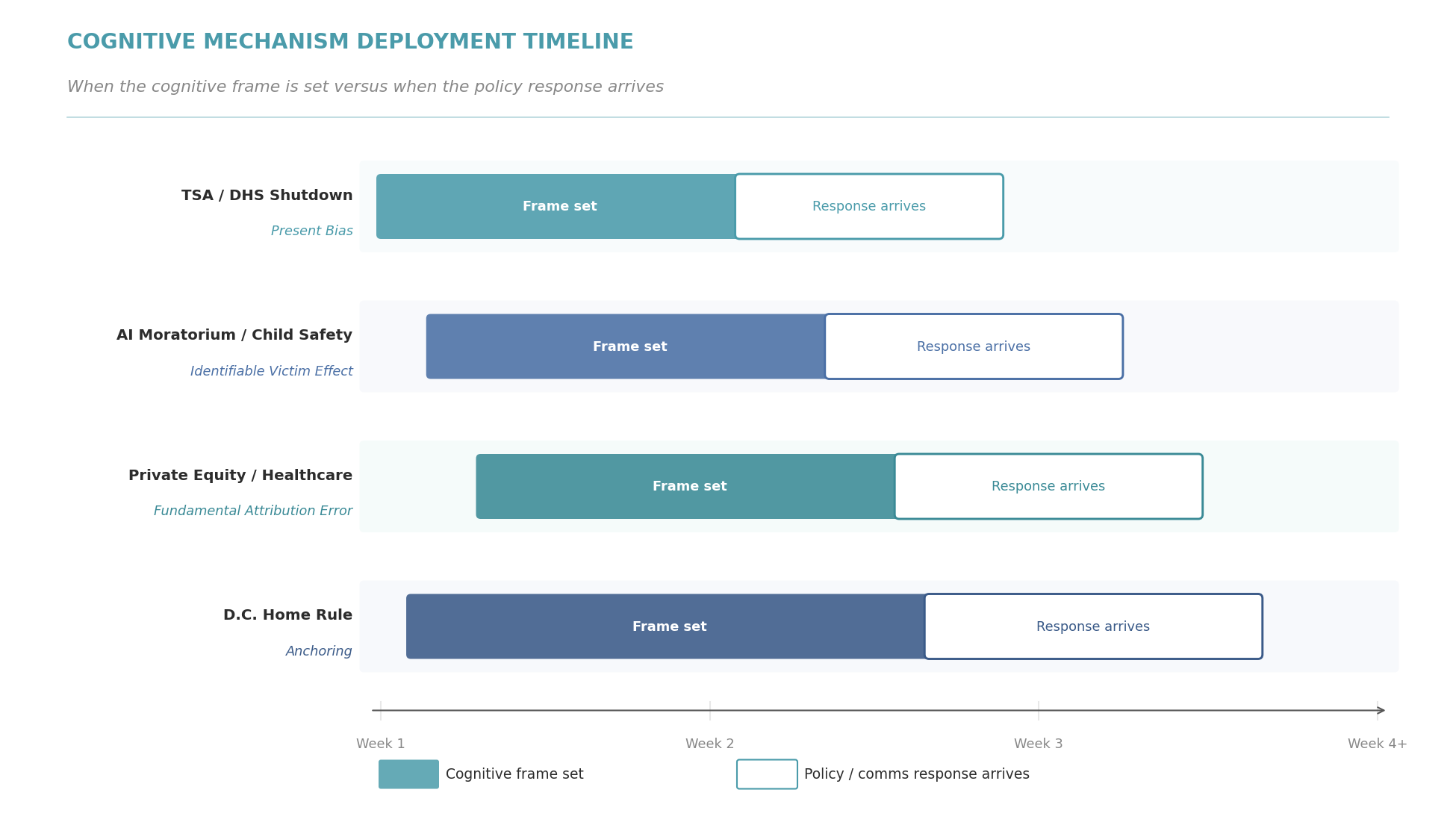
Chart 2: Cognitive Mechanism Deployment Timeline, April 2026 | Narrative Velocity | Accelerate Advocacy
"These fights are not being decided on the merits. They are being decided on the conditions under which the merits arrive."
The Organizational Gap
The common thread in all four fights is not ideology. It is architecture. The organizations on the losing side of these mechanisms are not losing because they are wrong. They are losing because they built their communications infrastructure to win a different kind of fight.
Corporate communications and public affairs functions were designed to manage information: clarify positions, respond to allegations, explain economics, maintain relationships with key stakeholders. That infrastructure works well when the fight is about what is true and what the data shows. It is poorly equipped for an environment where the fight has already moved to a level that data cannot reach.
Most organizations have one function when they need two. They have a message development function. They do not have a cognitive environment assessment function. They know what they want to say. They have limited visibility into the conditions under which what they want to say will be heard, processed, or rejected before it arrives.
This is not an argument against white papers, position documents, or economic analysis. Those arguments are necessary. The cognitive assessment runs parallel to them and answers a different question: not what do we want to say, but what conditions need to exist for what we want to say to land.
The four fights above illustrate what that gap costs. In each case, the communications response came after the cognitive frame was set. A counter-argument arrived into a room where the brain had already assigned the cause, identified the victim, weighed the immediate pain, or accepted the anchor. The counter-argument is not wrong. It is late.
THE CORE MECHANIC
Cognitive frames are not set by the loudest argument. They are set by the first credible signal. Organizations that wait for the argument to arrive before assessing the cognitive environment are making their most important decision after it has already been made for them.
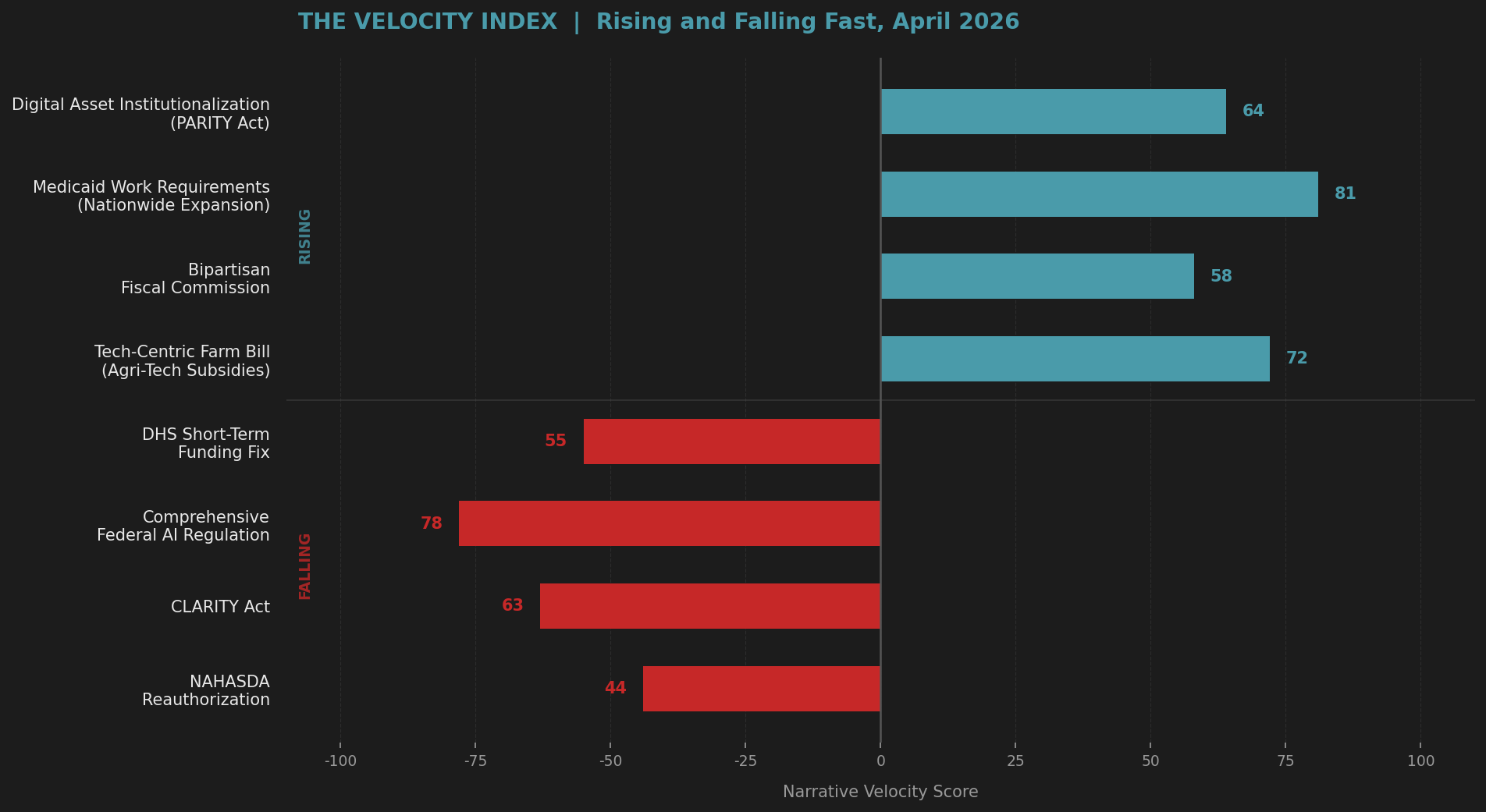
Chart 3: The Velocity Index | Rising and Falling Fast, April 2026 | Narrative Velocity | Accelerate Advocacy
What I Am Watching Next
The four mechanisms in this issue are not a complete picture of the cognitive dynamics shaping Washington right now. They are a snapshot of four that are visible, active, and moving fast enough to determine outcomes in the near term. In any live policy environment, there are more. The value is not in memorizing a list. It is in building the habit of looking for them before the argument is drafted.
That habit is rare. Most organizations enter a policy fight with their message ready and their opposition research done. Very few enter with a clear read of the cognitive environment their message is about to land in. The result is predictable: accurate arguments that fail to move audiences that were never positioned to receive them.
For the next 30 to 90 days, watch for organizations in the private equity healthcare, tech, and airline sectors to respond with data-heavy position papers that do not address the cognitive frame they are operating inside. The papers will be accurate. They will not move the needle. Watch for whether communications teams recognize why, or whether they conclude that the data simply needs to be louder. The latter is the more common response, and the more expensive one.
Also watch for the first organization in any of these four sectors to run a counter-narrative that directly addresses the mechanism being used against it. It will not announce that it is doing this. But the shape of the message will be different. Instead of answering the argument, it will be resetting the conditions. When you see it, you will recognize it.
"The organizations that will be heard in the current environment are not necessarily the ones with the strongest arguments. They are the ones that understood the conditions before the argument was built."
LET'S THINK IT THROUGH
If your organization is preparing a policy response, a position paper, or a communications strategy for any of the fights described here, or one that looks like them, I would be glad to spend 30 minutes assessing the cognitive environment before the argument is built.
Forward this to whoever asked you to make that white paper “viral.”