
SOTU Special Edition: The Split-Screen Union
What 36 Hours of SOTU Coverage Reveals About the Feedback Loop Between a Fractured Media and a Divided Electorate
Tuesday night, roughly 30 million Americans watched the same speech.
By Wednesday morning, they had consumed three completely different news events.
The obvious explanation is that the media is broken. That outlets are so ideologically captured they can no longer process the same set of facts into a shared reality. There's evidence for that in the data you're about to see.
But there's a harder question underneath it: does the media reflect a divided country, or does a divided country reflect its media?
The answer, based on 36 hours of post-SOTU coverage tracking, is "yes." Both. Simultaneously. The electorate fragments, so the media caters to the fragments. The media caters to the fragments, so the electorate fragments further. Each cycle widens the gap. And the 2026 State of the Union is the clearest evidence we've had that this feedback loop is no longer a theory. It's the operating reality for anyone who manages communications, defends a reputation, or tries to make sense of public narratives for a living.
This isn't a take on whether the speech was good or bad. Plenty of people have already written those pieces. This is a look at the machinery underneath, and what it means for anyone trying to navigate it.
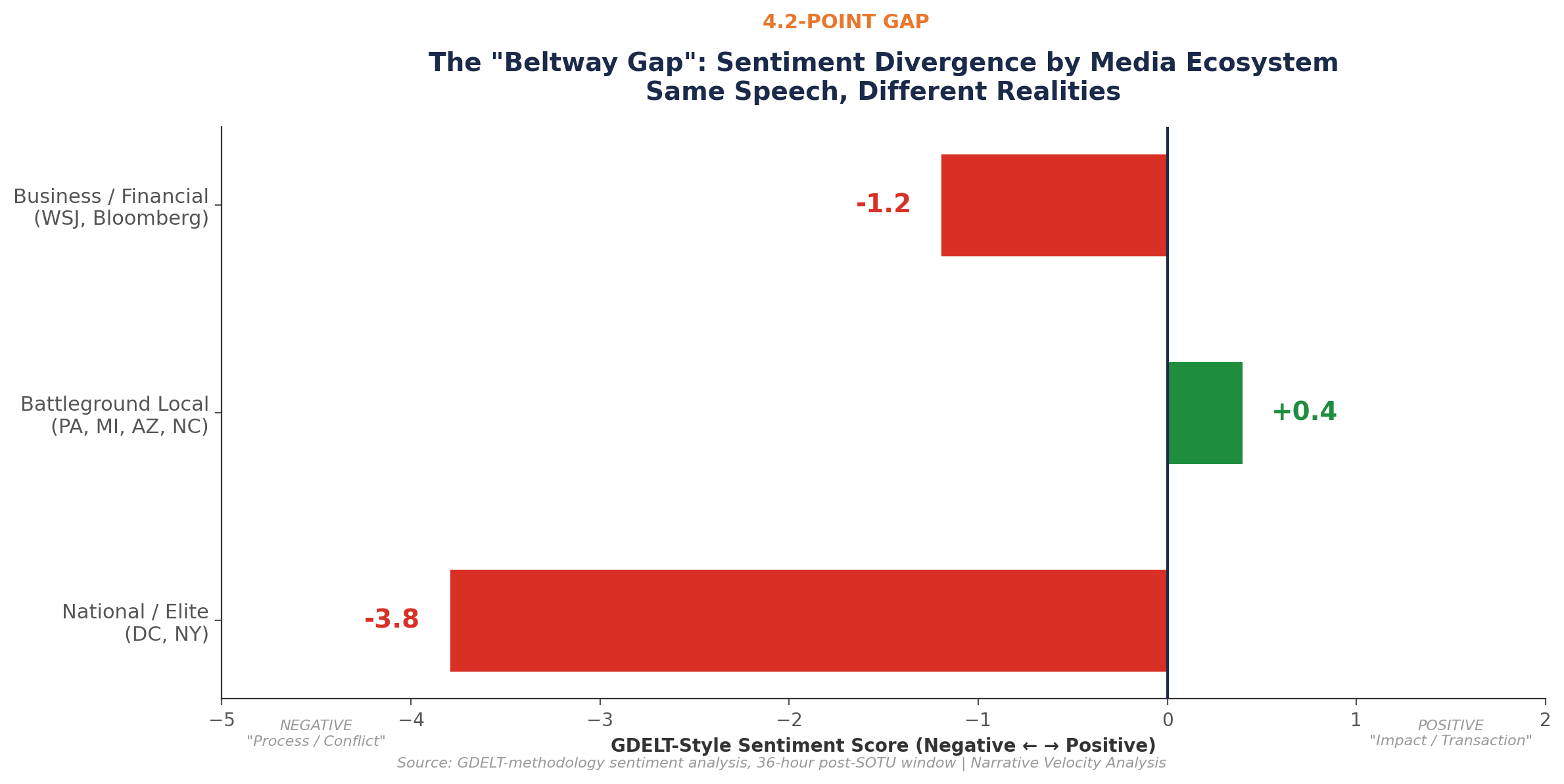
Chart 1: Sentiment Divergence by Media Ecosystem | Narrative Velocity | Accelerate Advocacy Analysis
The Split-Screen Union: What 36 Hours of SOTU Coverage Reveals About the Feedback Loop Between a Fractured Media and a Divided Electorate
Tuesday night, roughly 30 million Americans watched the same speech.
By Wednesday morning, they had consumed three completely different news events.
The obvious explanation is that the media is broken. That outlets are so ideologically captured they can no longer process the same set of facts into a shared reality. There's evidence for that in the data you're about to see.
But there's a harder question underneath it: does the media reflect a divided country, or does a divided country reflect its media?
The answer, based on 36 hours of post-SOTU coverage tracking, is yes. Both. Simultaneously. The electorate fragments, so the media caters to the fragments. The media caters to the fragments, so the electorate fragments further. Each cycle widens the gap. And the 2026 State of the Union is the clearest evidence we've had that this feedback loop is no longer a theory. It's the operating reality for anyone who manages communications, defends a reputation, or tries to make sense of public narratives for a living.
This isn't a take on whether the speech was good or bad. Plenty of people have already written those pieces. This is a look at the machinery underneath, and what it means for anyone trying to navigate it.
Three Realities, One Speech
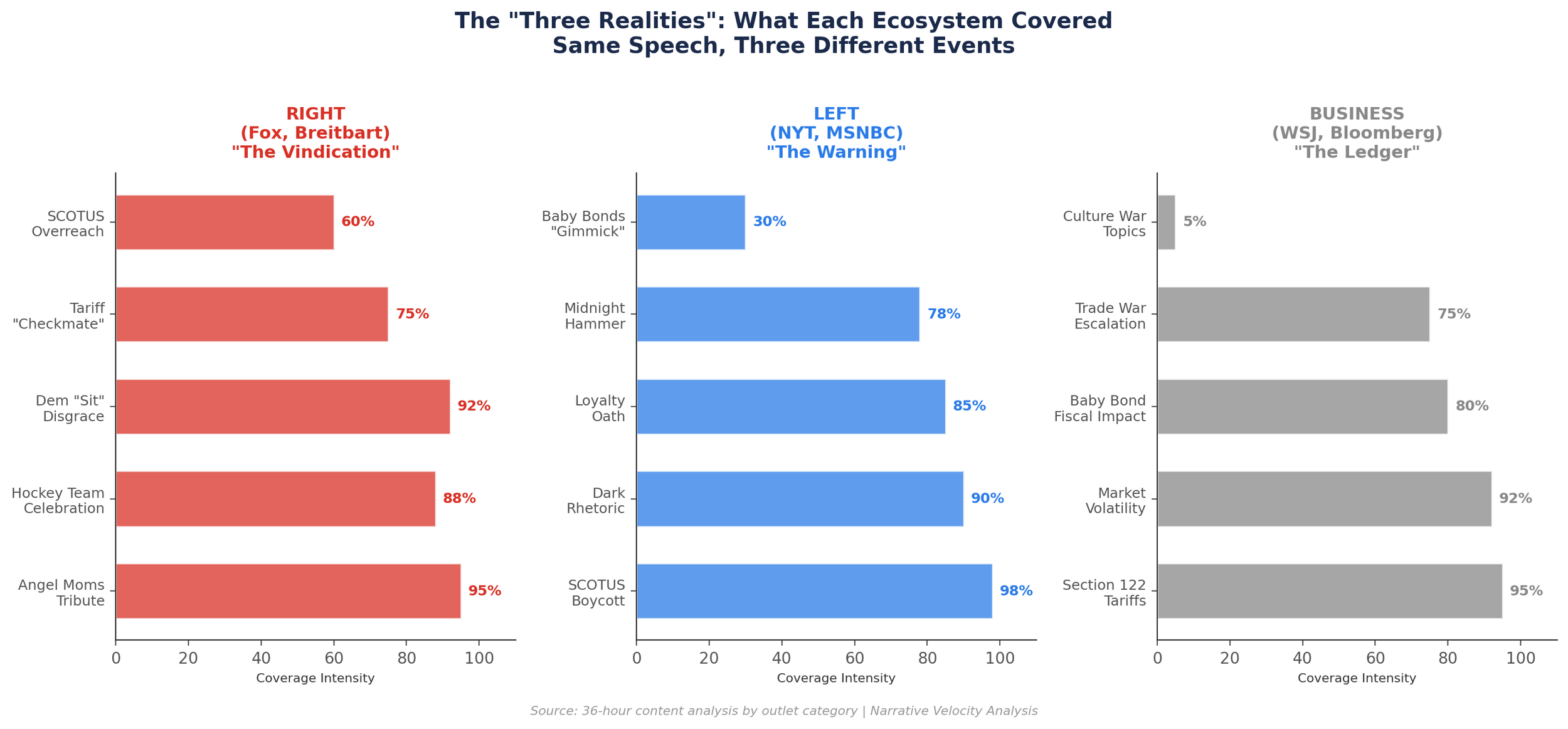
Chart 2: What Each Ecosystem Covered | Narrative Velocity | Accelerate Advocacy Analysis
If you watched Fox News Tuesday night, you saw a restoration. The emotional tributes to Angel Moms and the gold medal hockey team. The framing of Democratic silence as disrespect for grieving families. The tariff announcement positioned as a legal chess move. SCOTUS barely registered.
If you watched MSNBC or read the New York Times, you saw a warning. Dark rhetoric. Authoritarian undertones. A President defying the judiciary. The empty Supreme Court seats dominated the visual coverage. Baby Bonds were dismissed in a single paragraph as a "fiscal gimmick."
If you read Bloomberg, you saw a spreadsheet. Section 122 tariff mechanics. Import cost modeling. Consumer price impact projections. The culture war might as well not have happened.
None of these three ecosystems referenced the others' dominant stories in any meaningful way. They weren't just interpreting the same facts differently. They were selecting entirely different facts to report.
The Narrative in Motion
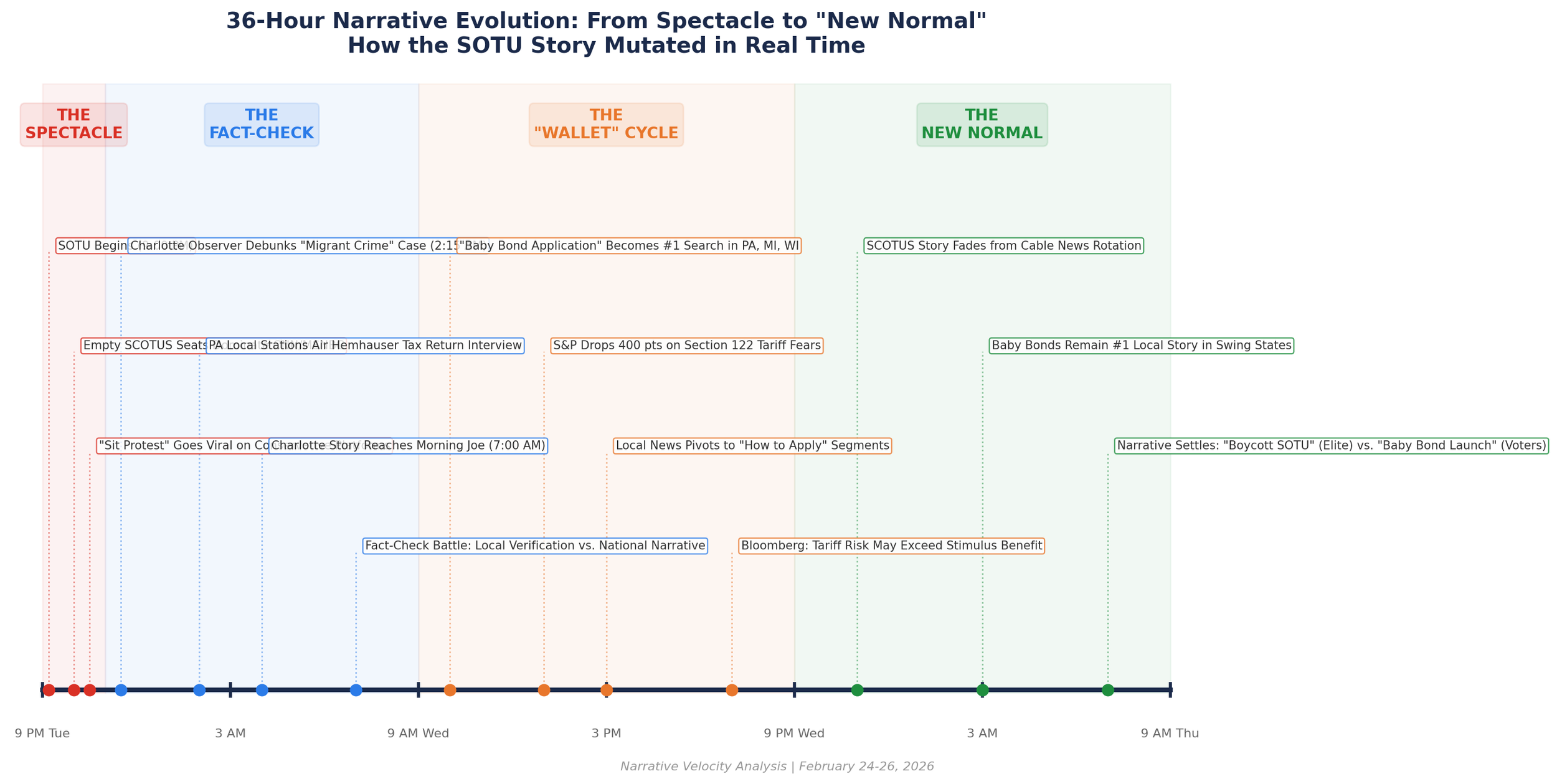
Chart 3: 36-Hour Narrative Evolution | Narrative Velocity | Accelerate Advocacy Analysis
Most SOTU analysis is a snapshot. Here's what it looks like when you track the narrative as it actually moved.
Hours 0-2 (Tuesday 9 PM to 11 PM): The Spectacle. The empty Supreme Court seats and the "sit protest" (Democrats refusing to stand during the Delilah Law section) dominated the first two hours. CNN and MSNBC ran "Constitutional Crisis" chyrons. Conservative platforms had the viral clip of the sit protest cut and circulating before the speech was over.
Hours 2-12 (Overnight into Wednesday morning): The Fact-Check. This is where local media did its most important work, and where the national/local divergence became concrete.
At 2:15 AM, the Charlotte Observer published a fact-check on the Iryna Zarutska murder case that the President had used to frame the "migrant crime" narrative. The suspect, it turned out, was a U.S. citizen born and raised in Charlotte. By 7:00 AM, that fact-check had traveled upstream to Morning Joe. But it never penetrated the conservative national ecosystem, where the "migrant crime" framing stood unchallenged.
Meanwhile, in Pennsylvania, local stations aired an interview with Megan Hemhauser, the waitress the President had mentioned by name. She showed her tax returns on camera. Verified the $5,000 savings number. This provided a form of local validation that was immune to the national fact-check apparatus.
Two stories. Opposite directions. Both driven by local reporting that the national media either amplified selectively or ignored entirely.
Hours 12-24 (Wednesday daytime): The Wallet Cycle. The culture war faded as people went to work. In its place, two competing economic stories emerged.
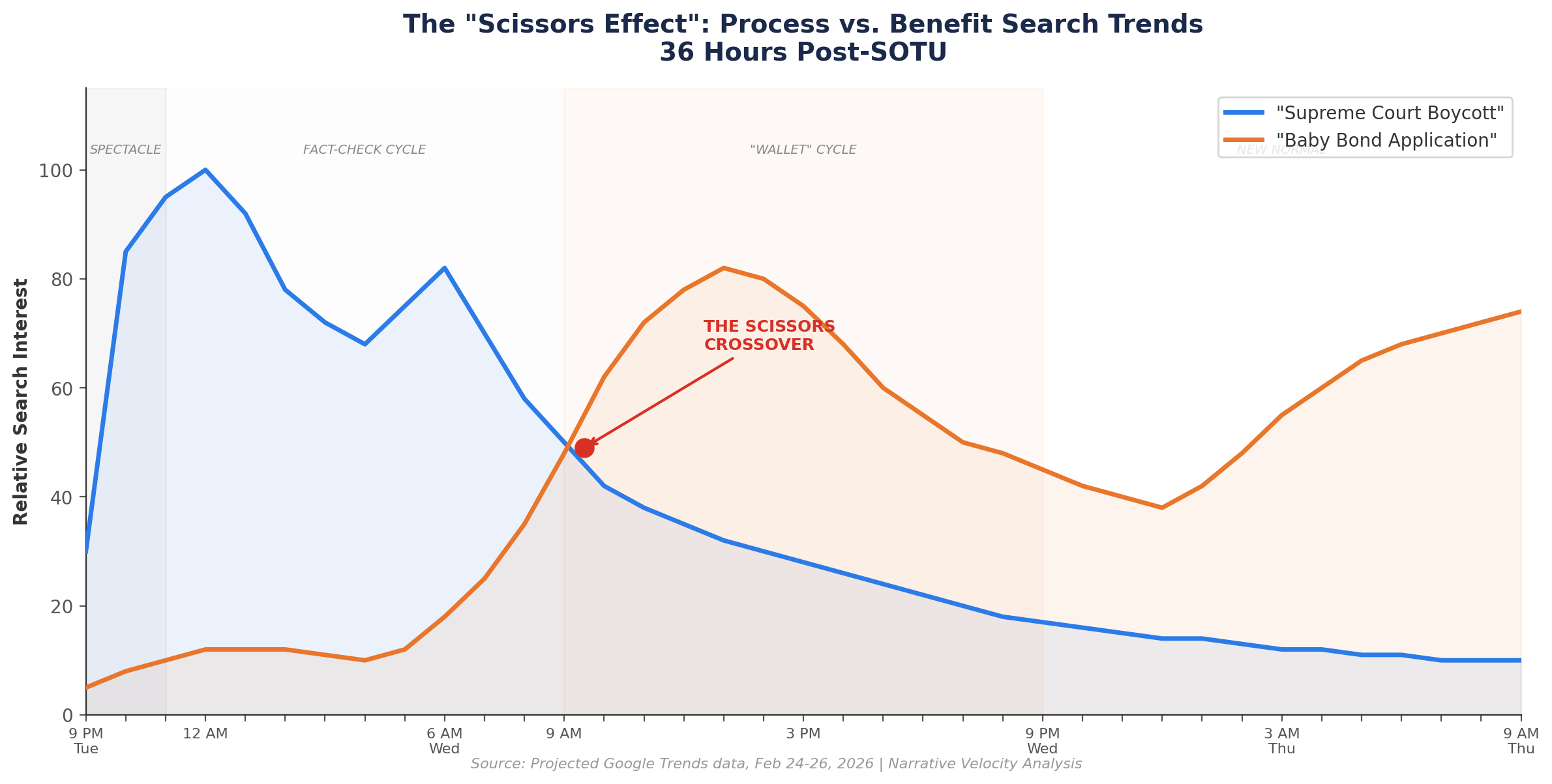
Chart 4: Process vs. Benefit Search Trends | Narrative Velocity | Accelerate Advocacy Analysis
Voters saw free money. Investors saw inflation risk. Both were responding to the same 107 minutes of television.
Hours 24-36 (Wednesday night into Thursday morning): The New Normal. The SCOTUS boycott story faded from cable rotation. Baby Bonds remained the top local story in swing states. The narrative settled into two parallel tracks that showed no signs of converging: "The Boycott SOTU" for political elites and "The Baby Bond Launch" for everyone else.
The Tactical Audit
Strip away ideology and look at this purely as an exercise in strategic communications. What worked and what didn't?
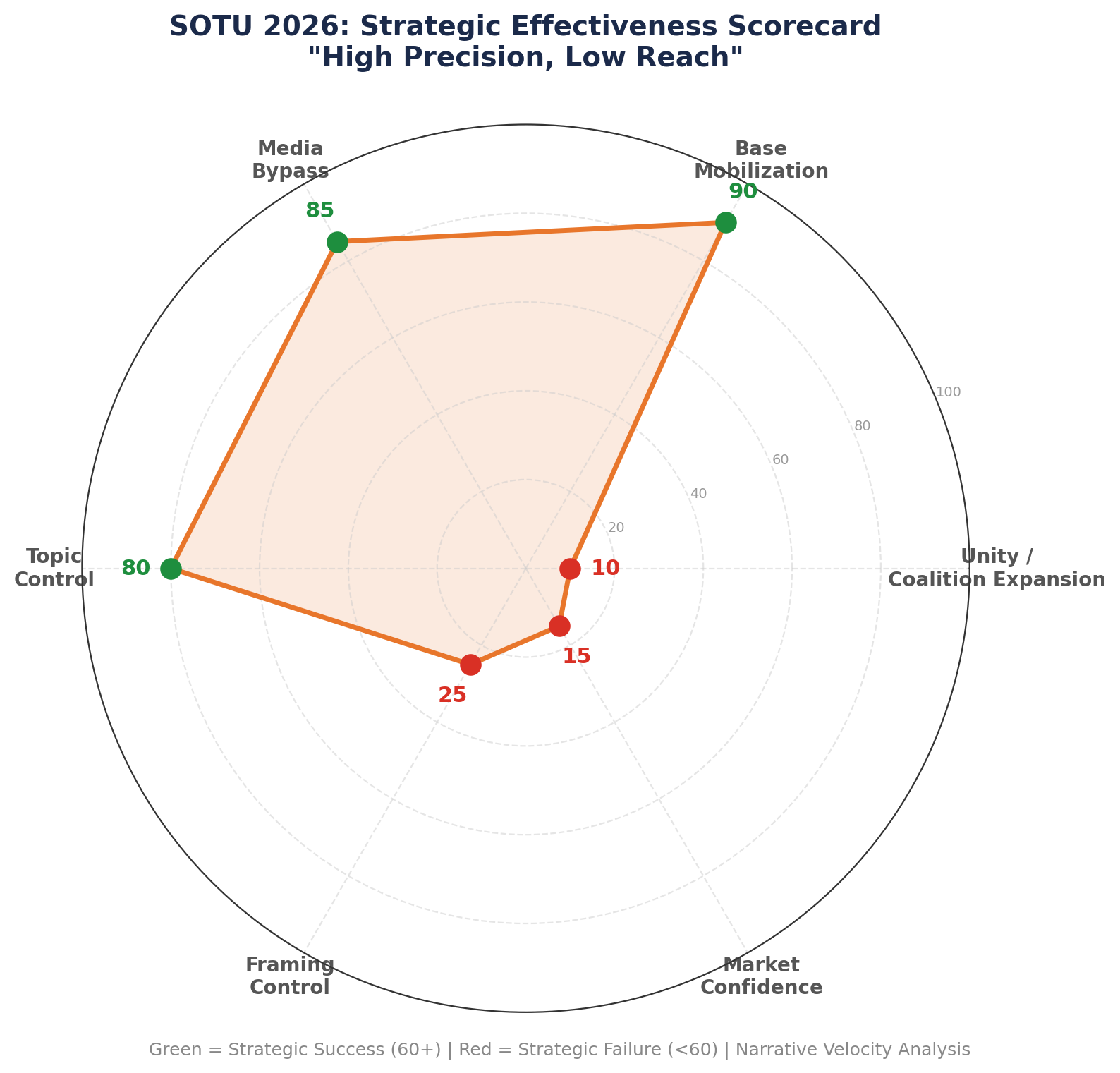
Chart 6: Strategic Effectiveness Scorecard | Narrative Velocity | Accelerate Advocacy Analysis
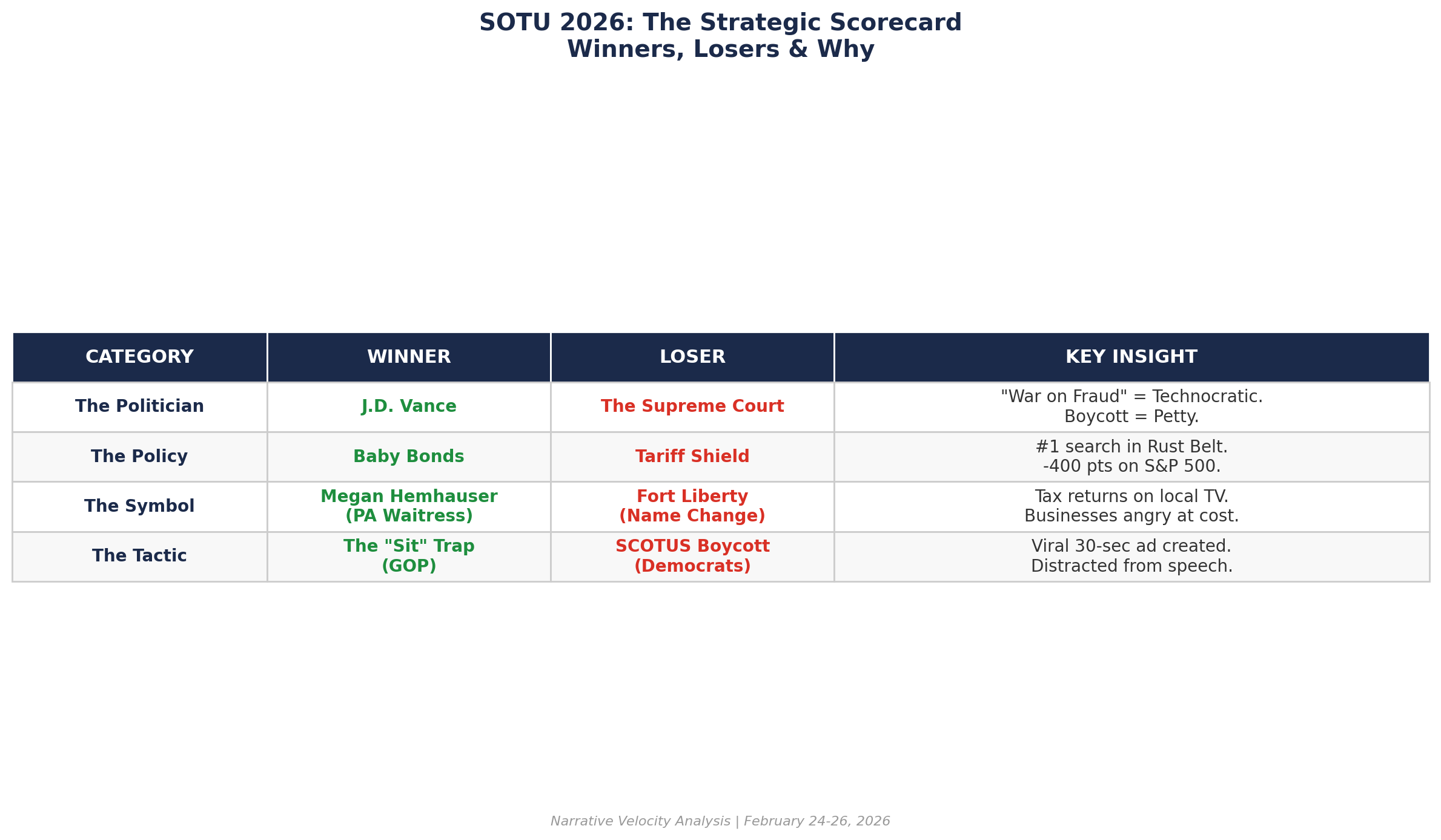
Chart 7: Winners, Losers & Why | Narrative Velocity | Accelerate Advocacy Analysis
What the Administration got right:
The media bypass worked. The Trump Accounts were designed as a consumer product, not a policy proposal. By building a .gov website and a direct application process, they forced local news to cover it as "news you can use" rather than filtering it through political commentary. That is a sophisticated understanding of how local news incentives differ from national ones.
The visual trap worked. The Delilah Law section was explicitly engineered to force Democrats into a losing visual. Standing meant endorsing the policy. Sitting meant being filmed not standing for a grieving family and a road safety bill. The 30-second clip was cut before the applause died down.
The local validation was pre-staged. Hemhauser didn't just happen to be available for local TV the next morning. That was coordinated. A constituent showing verified tax savings on local news is a form of proof that no national editorial can dismantle.
What the Administration got wrong:
The fact-check vulnerability was sloppy. Using the Zarutska case to frame "migrant crime" when the suspect was a U.S. citizen handed the opposition a verifiable error. In Charlotte, it dismantled the entire public safety argument. The fact that it didn't travel nationally doesn't make it a clean win. It makes it a ticking liability.
The energy message was tone-deaf in the wrong places. The "Drill Baby Drill" victory lap played well in a national broadcast. But in Texas, where voters are dealing with 12% utility rate hikes driven by the AI data center power crunch, it landed as a DC bubble moment. The Administration failed to localize the energy message in the one state where it mattered most.
What Democrats got right:
The silent defiance strategy fed the "authoritarian" frame. By coordinating a sit-in rather than heckling, they gave CNN and MSNBC exactly the footage needed to run the "dark rhetoric" narrative.
The economic pivot was effective in the right rooms. Countering "booming economy" with "can you afford rent?" resonated in cable news panels and editorial boards.
What Democrats got wrong:
They walked into the trap. Refusing to stand for a road safety bill, regardless of its nativist packaging, created exactly the optic the speechwriters designed. That clip will circulate on TikTok through the midterms.
They dismissed the cash. Calling Baby Bonds a "gimmick" while the .gov site was already accepting applications is the kind of disconnection that loses elections. You cannot tell a working-class family their $1,000 is a lie when the website works. They ceded the aspiration lane entirely.
So What? The Lesson for Anyone Managing Narrative Risk
This analysis isn't about who won Tuesday night. It's about a structural reality that affects every organization trying to manage its reputation, defend against a pressure campaign, or communicate through a crisis.
The feedback loop between a fragmented electorate and a fractured media has produced something new: functionally separate information ecosystems with different incentive structures, different fact-checking patterns, and different audience behaviors. A story that dominates the Acela Corridor may not exist in the battleground states, and vice versa. The loop isn't slowing down. It's accelerating. And the gap between what the national press covers and what local audiences actually care about is widening with every news cycle.
Three things follow from this:
Where your story lands matters more than what your story says. The Administration's Baby Bond message was substantively identical in every market. But it was received as a "political stunt" in New York and as a "how-to guide" in Pittsburgh. The difference wasn't the message. It was the ecosystem that processed it.
Local verification is the new credibility. A constituent with a tax return on the evening news neutralized an entire national fact-check apparatus. A local reporter in Charlotte dismantled a national narrative with a single phone call. The power center is shifting from editorial boards to local newsrooms. Anyone running a communications strategy that doesn't account for this is operating on an outdated map.
The "center" isn't moderate. It's transactional. Business media didn't split the difference between left and right. It ignored the political conversation entirely and ran its own parallel analysis based on financial mechanics. The traditional "centrist" media consumer isn't looking for balance. They're looking for relevance to their bottom line.
For corporate communicators, crisis managers, and anyone defending against coordinated external pressure: this is the landscape now. The media doesn't just reflect reality anymore. It creates parallel realities. And the electorate is sorting itself into them faster than most organizations realize. Plan accordingly.
If you're tracking how this feedback loop is showing up in your industry or your state, I'd like to hear it. Drop a comment with the most surprising local vs. national coverage gap you've noticed this week.