
The Midterm Gravity: Why 2026 is No Longer About the Future
It has been a quiet few months in this corner of LinkedIn, but the silence wasn't for a lack of activity. I’ve spent the start of this year watching the data settle as we crossed the threshold into 2026. If 2025 was a year of "what if," January has officially become the year of "what now".
The landscape has shifted aggressively from "policy exploration" to "political survival". As we look toward the 2026 midterms, a single force is warping every conversation in Washington and beyond: Electoral Gravity.
The Affordability Convergence
We are witnessing the collapse of distinct policy silos into a single "Cost of Living" master narrative. Whether you are talking about climate change or AI, if your issue isn't framed as a direct pocketbook benefit to the voter, it has become effectively invisible.
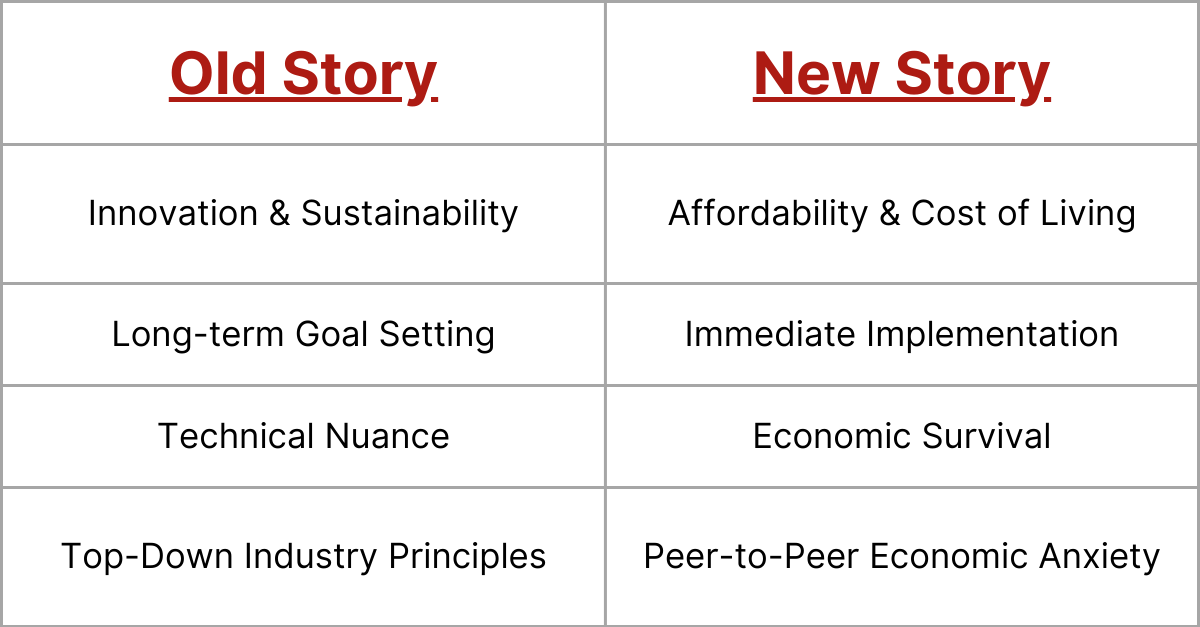
The Trend: Advocacy that previously focused on innovation or sustainability is being repackaged exclusively as "lowering costs for families".
The Reality: Climate advocates are no longer arguing for the planet; they are arguing for "lower utility bills".
The Shift: AI proponents have moved away from "modernizing tech" toward automation that "reduces the cost of goods".
"If your issue cannot be framed as a direct pocketbook benefit to the midterm voter, it is effectively invisible in the current news cycle."
When "Future-Proofing" Stops Working
For years, organizations believed that setting ambitious, long-term goals would build trust. That isn't happening anymore. The electorate is fatigued by promises of "Net Zero by 2050" or broad safety principles.
They are engaging only with narratives about immediate implementation—the tangible "breaking ground" on physical infrastructure that happens now.
How the Story Is Changing
The moral center of advocacy has shifted from the collective future to the immediate personal economy.
Signals to Watch
Organic Velocity: Narratives rooted in economic anxiety are spreading peer-to-peer with high velocity, validating the voter's lived experience of high costs.
Deceleration in Tech: The momentum for state-by-state AI safety acts has hit a wall as industry successfully pushes for slower, unified federal debates.
Artificial Spread: Tech policy narratives are maintaining high visibility only through massive institutional ad spend, though they have low organic engagement.

The Path Forward
To maintain relevance in the 2026 market, you must adopt the "Implementation" frame.
Drop the Jargon: Move away from technical nuance and toward the language of economic relief.
Show, Don't Promise: Replace long-term targets with demonstrations of physical delivery.
Validate the Anxiety: Acknowledge the voter's lived experience of cost before pitching the benefits of your policy.
Success in this environment requires moving away from announcing goals and toward demonstrating how you are helping the voter survive the month.
Want to Know More?
If you want to better understand the "physics" of how narratives are spreading in your specific sector or how to navigate the "Electoral Gravity" of 2026, let's chat. A brief conversation can help identify the right messages to reach your target audiences during this aggressive shift in the market.