
The Story Getting National Coverage Is Not the Story That Will Come for You
Most organizations track national coverage. That is the rational thing to do. The Wall Street Journal, Politico, the trade press. That is where policy gets made, where the narrative of record lives, where your board members and stakeholders are reading.
The problem is that the story that will actually hurt you is rarely breaking there.
What I have been watching this month is a gap. In three completely different issue areas, national coverage is telling one story and local coverage is telling another. The events are identical. The facts are often the same. The moral conclusions are so different that you would barely recognize them as the same situation.
That gap is where the ambush happens.
Sentiment does not dissipate. It accumulates upstream. The anger you ignore in a local county board meeting today will become the bill you are fighting in the Senate tomorrow.
Two Reporters. Same Story. Different Reality.
Private equity firms have been acquiring mobile home parks steadily for several years. The financial press covers it as a clean investment thesis. Residents own their homes but rent the land beneath them. Moving a manufactured home costs roughly $10,000, which means tenants rarely leave. The trade press calls this stickiness. Analysts call it a retention moat. Coverage describes it as recession-resistant, predictable, and low-risk.
Local coverage in Antioch, Tennessee is describing the same investment with entirely different words. That $10,000 figure is not a moat. It is a cage. Residents who cannot afford to leave are absorbing rent increases that outpace inflation, aggressive towing fees that feel punitive, and a faceless corporate landlord that replaced a local owner they had an actual relationship with. The word that keeps surfacing in that coverage is not stickiness. It is hostage.
Same fact. Two completely different moral universes. Executives reading the financial press believe the situation is understood and under control. Meanwhile, state Attorneys General in several markets are assembling consumer protection cases built almost entirely on the local narrative, not the financial one. The boardroom slide says neutral. The town hall meeting says criminal.
That gap between those two readings is not a communications problem. It is a policy threat incubating in the dark.
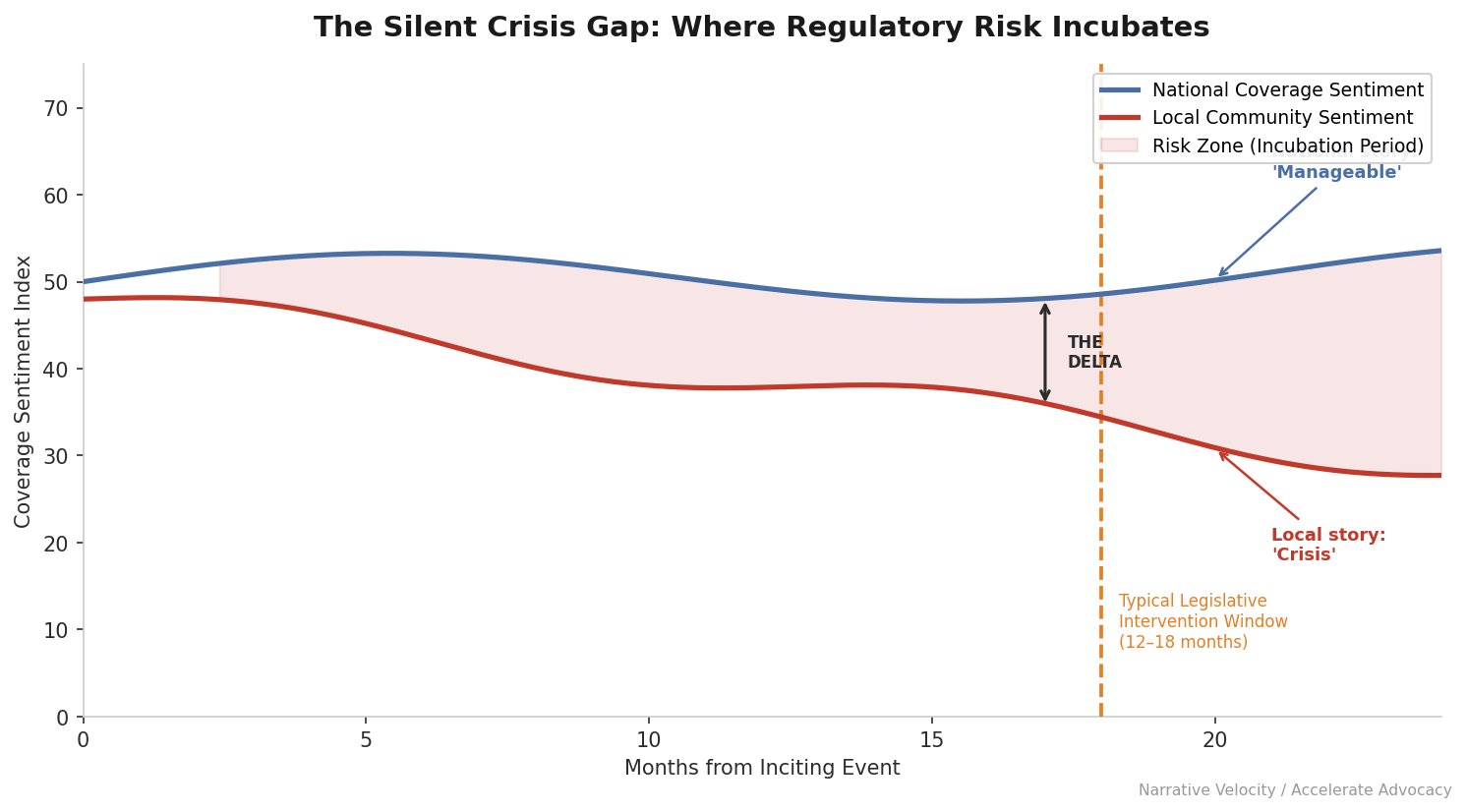
Chart 1: The Silent Crisis Gap | Narrative Velocity | Accelerate Advocacy
Why the Gap Exists
The divergence between national and local coverage is not random. It follows a predictable cognitive pattern, and understanding it is what separates organizations that see these situations coming from the ones that get caught off guard.
National and corporate coverage processes events in the abstract. Portfolio optimization. Risk adjustment. Market correction. The math is sound, the logic is defensible, and the language is clinical. People who spend their careers reading this kind of coverage develop an unconscious assumption that the math is the whole story.
Local coverage operates in the concrete. It does not cover a closure as a financial event. Consider Maria Santos, 34, who is 36 weeks pregnant and just learned that the hospital where she planned to deliver is closing its obstetric unit next month. The nearest alternative is 40 miles away on a two-lane road that closes in winter storms. That is not an operational challenge. That is a woman calculating whether she can make it in time.
There are 2.2 million women currently living in what researchers classify as maternity care deserts. National coverage describes the same situation as a consolidation of rural service lines. Both are true. Only one of them generates the kind of fear that moves a state legislature.
The company thinks it is solving a math problem. The community believes it is fighting a villain. They are not having the same argument.
The third piece is the one that creates the most organizational danger. Executives tend to believe the market system is broadly fair. A hospital consolidates because the volumes do not justify the cost. The action is constrained by forces outside anyone's control. That is how it feels from the inside.
The community watching that same action does not see a market constraint. It sees a choice. And it assigns that choice to character. Greed. Indifference. The decision to leave. The company believes it is solving a math problem. The community believes it is fighting a villain. Those two groups are not having the same argument, which is why the company's explanation, however accurate, consistently makes things worse.
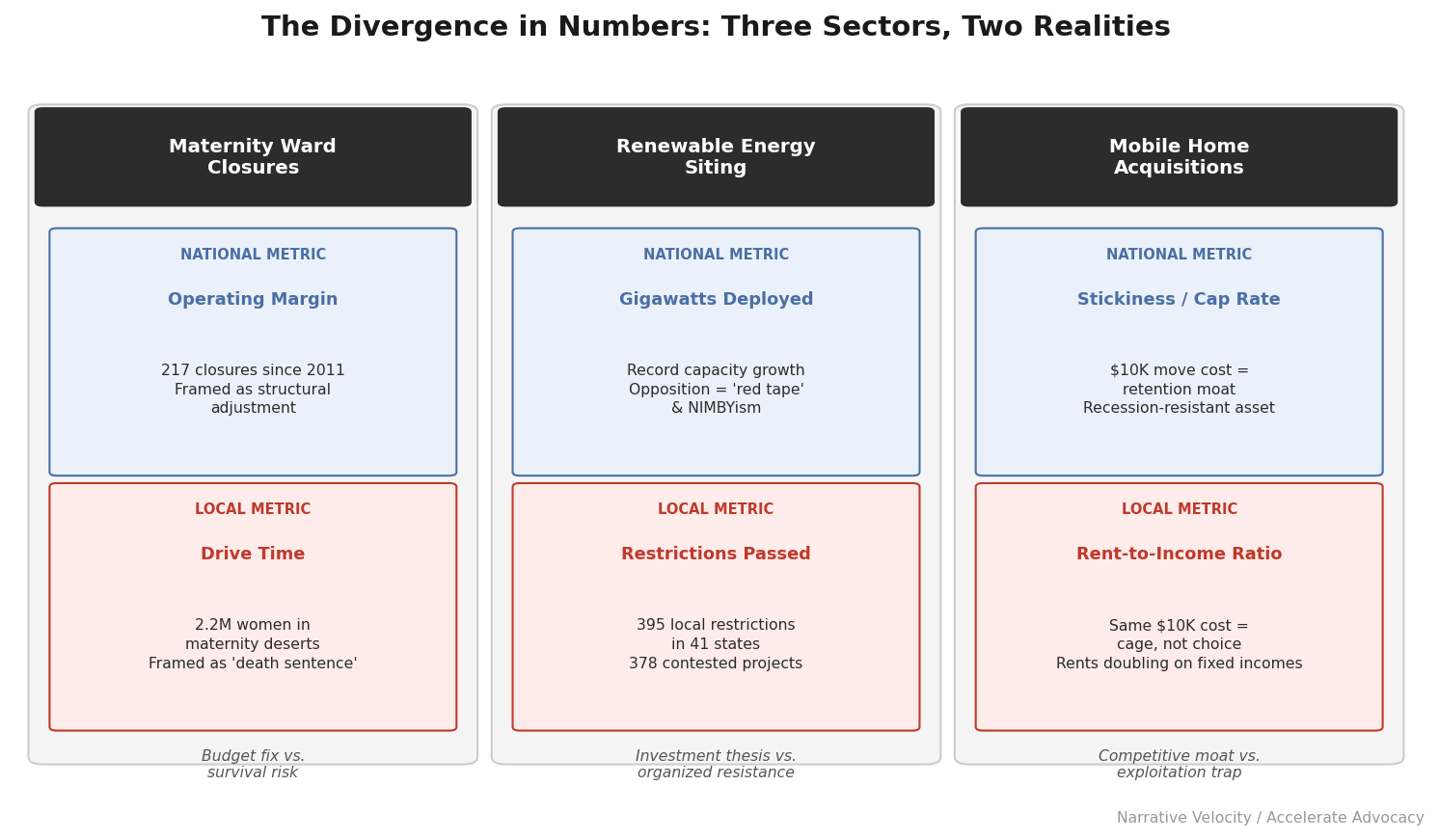
Chart 2: The Divergence in Numbers | Narrative Velocity | Accelerate Advocacy
The Delta Is Your Clock
Here is what the gap between national and local coverage actually tells you, if you know how to read it.
When national and local coverage are both negative, the crisis has arrived. You are already in it.
When national coverage is neutral or positive and local coverage is angry, you have a window. The pattern across multiple sectors suggests that window is typically six to eighteen months before local sentiment organizes into regulatory action. That is not a guarantee. It is consistent enough to be operationally useful.
The Delta, the variance between what national monitoring shows and what local sentiment is actually doing, is a countdown metric. Organizations that measure Share of Voice or National Sentiment as their primary risk indicators are watching the wrong number. The number that matters is the gap between those two readings.
THE CORE MECHANIC
A high delta between national and local coverage is not a PR problem yet. It is the incubation phase of a regulatory assault. The difference between those two things is time, and that time is visible to anyone looking at the right level.
The renewable energy story is one of the clearest live examples right now. National policy coverage frames local resistance as permitting friction. The dominant description is NIMBYism slowing the clean energy transition. While that story runs, local governments across 41 states have passed 395 specific restrictions designed to block projects, and 378 individual projects are currently facing organized opposition. That is not friction. That is a movement. And the coalition driving it does not appear anywhere in the national coverage because it does not fit the frame. In rural Ohio and Kansas, conservatives and progressives are showing up at the same county board meetings, using the same language, because both landed on food security as the organizing frame. The conservatives are not there because they oppose clean energy. The progressives are not there because they oppose progress. Both showed up because someone proposed replacing farmland with solar panels in a county where the nearest grocery store is already a 30-minute drive. That shared fear created an alliance that no one in Washington is tracking yet. It will eventually show up in a statehouse hearing. The organizations still reading gigawatt projections will not see it coming.
What Happens When Nobody Is Watching
Dollar General is the clearest recent example of what the full cycle looks like.
Local coverage spent years documenting understaffed stores, unsafe conditions, and communities that felt the company had extracted value without giving much back. That coverage stayed local. It was not registering in national monitoring as a material concern. The company's national story remained largely intact.
The local narrative did not dissipate. It accumulated. Local politicians picked it up. Activists organized around it. Because there was no counter-narrative coming from the company at the local level, the only explanation available to communities was the one opponents were providing. Eventually the local story became the national story, and by then it arrived as federal OSHA investigations and state-level regulatory actions.
If your boardroom slide says 'Neutral' but the town hall meeting says 'Criminal,' you do not have a PR problem. You have a policy threat incubating in the dark.
The maternity ward closures are earlier in that same cycle right now. The policy logic for consolidating obstetric units is defensible. Local coverage in places like Baker City, Oregon is documenting something else entirely. Women describing the drive through a mountain pass in winter, in active labor, to reach the nearest hospital still delivering babies. The language in that coverage is not frustration. It is fear. That shift in emotional register, from sadness about a loss to genuine fear about what comes next, is the specific signal that tends to precede legislative intervention. When local coverage makes that shift, the window is typically twelve months or less.
Most organizations are not looking at that window. They are watching their national dashboard say neutral.
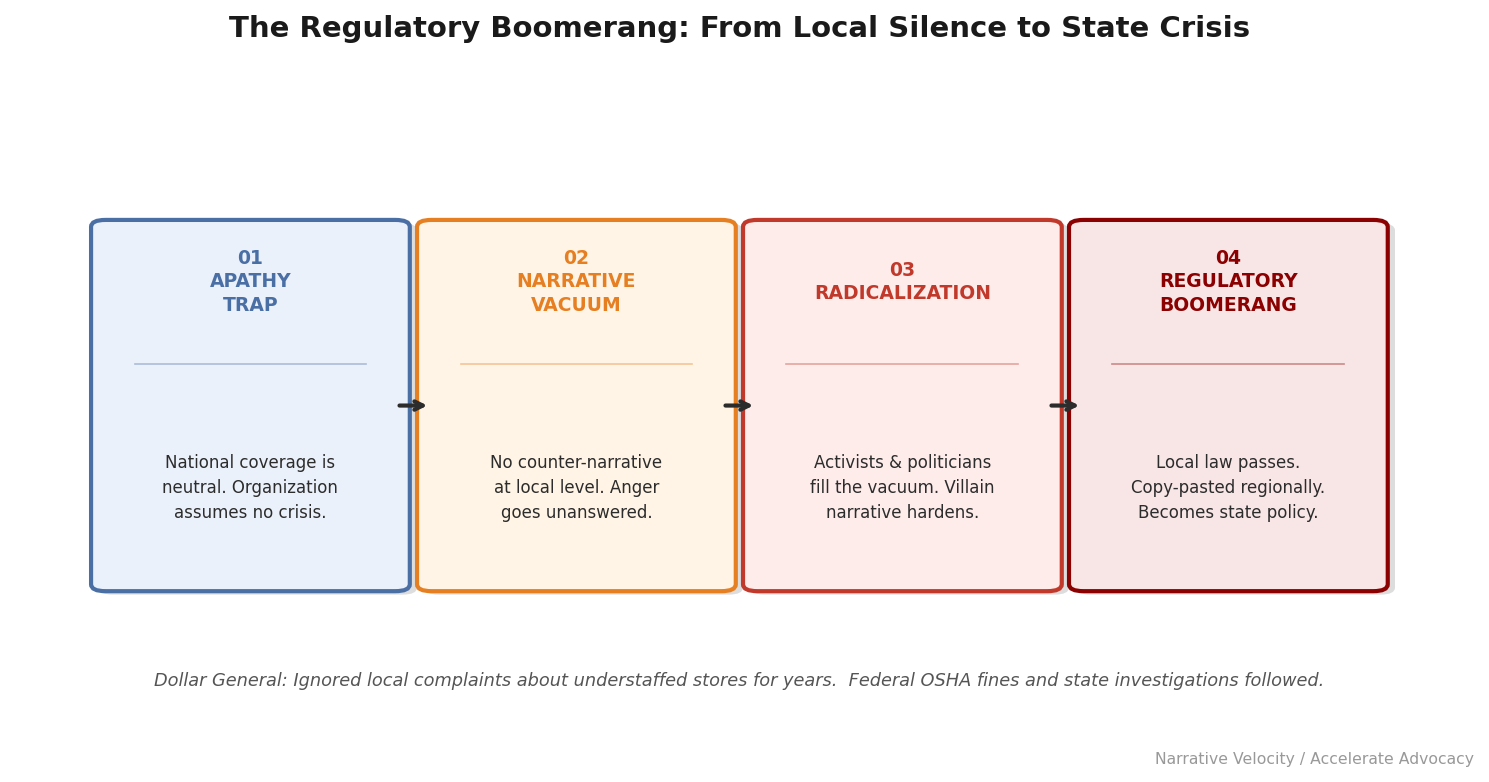
Chart 3: The Regulatory Boomerang | Narrative Velocity | Accelerate Advocacy
How to See It Coming
Most organizations do not have a local monitoring problem because they decided local coverage does not matter. They have it because nobody specifically owns that responsibility, and the existing tools are built to measure national volume.
The good news is that the Delta is visible before it becomes a crisis. The signals are readable if you know what to look for. Is the local emotional register shifting from frustration to fear? Is a specific villain emerging with a name and a face? Is opposition forming across lines that would not normally align? Those questions do not require a major new infrastructure investment. They require a disciplined process and someone who understands what the answers mean.
The organizations that do this well do not wait for the local story to arrive in Washington. They read it in real time, understand what it signals, and build their response strategy while there is still room to shape the outcome.
That window is almost always shorter than people expect. And it is only visible to the people who are looking.
What I Am Watching Next
National coverage is not wrong. It is covering the story that is visible from where national reporters sit. Local coverage is covering the story that is visible from where people live. Those are genuinely different vantage points, and they produce genuinely different risk profiles for your organization.
The gap between them is measurable. It is predictive. And it is almost always actionable, but only during a specific window that closes faster than most organizations realize.
Each of the stories in this edition is at a different point on the same timeline. The mobile home story is furthest along. Attorneys General are already building cases, and the local narrative has hardened into a legal frame that will be very difficult to reverse. The maternity ward closures are next. The emotional register in local coverage has shifted from loss to fear, and that shift is typically twelve months or less from legislative action. The renewable energy coalition is earliest and most dangerous precisely because it is still invisible to the organizations it will eventually target. In each case, the window to act was widest when the fewest people were paying attention.
That gap is closeable. It just requires looking in the right places before the story arrives on your doorstep.
What I track is how concern becomes policy language. The place that process starts is almost never Washington.
LET'S THINK IT THROUGH
The analysis I do looks specifically at where the Delta is building in sectors and issue areas relevant to my clients. If you are wondering whether your organization has a gap between what national monitoring is showing and what is actually developing at the local level, that is exactly the kind of conversation worth having.
Forward this to someone whose job is to not get caught off guard.